Cat Body Language Guide: Understanding Your Cat's Tail, Ears & Posture
Learn to read your cat's body language. Decode tail positions, ear signals, and posture to understand when your cat is happy, anxious, or wants space.
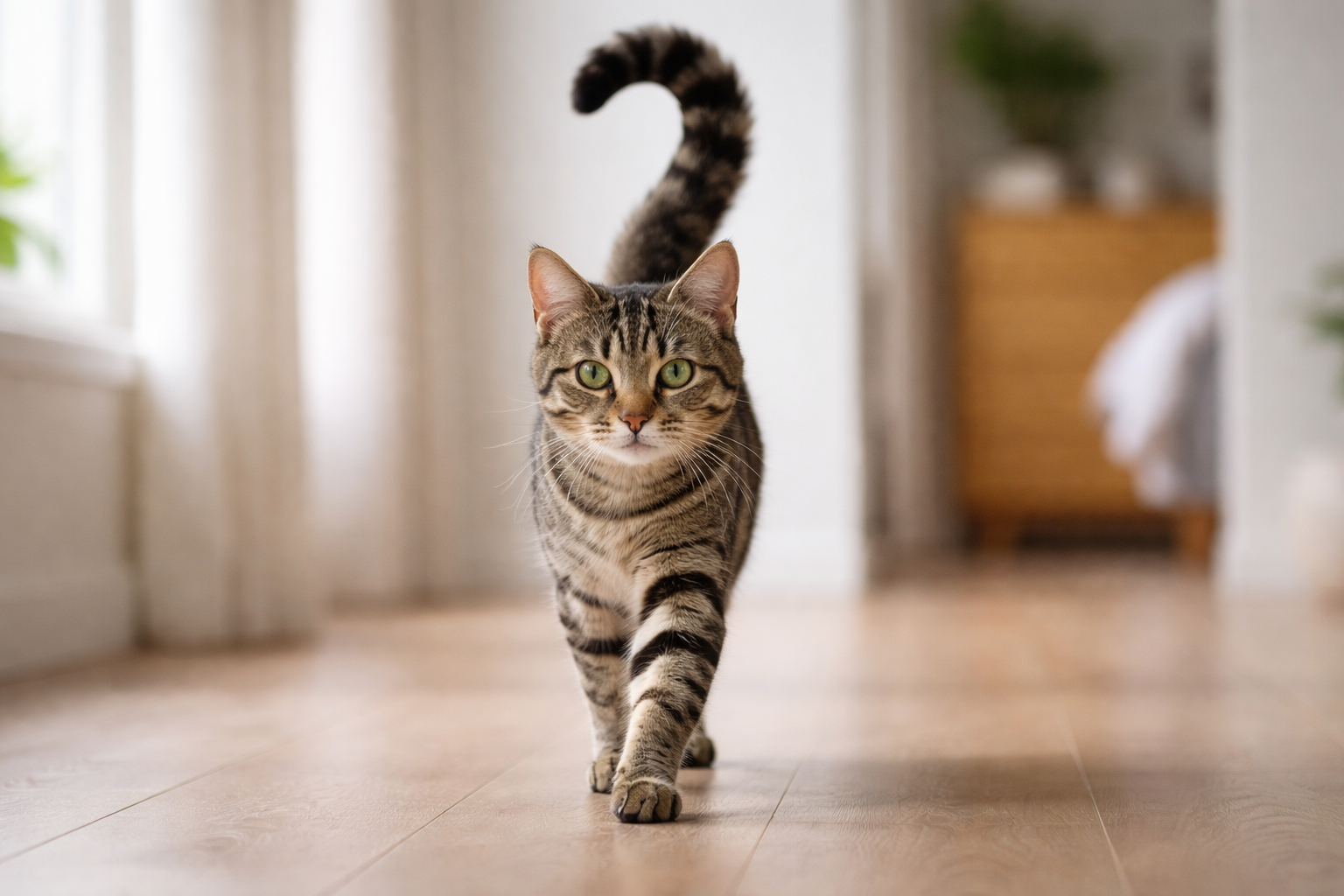
Cats have a reputation for being mysterious. Aloof. Impossible to read. But that's not quite true. Cats communicate constantly—we just speak different languages.
Unlike dogs, who evolved alongside humans for thousands of years, cats domesticated themselves more recently and retain much of their wild communication style. Learning to read cat body language takes a bit more effort, but it's absolutely possible.
This guide breaks down what your cat is telling you through their tail, ears, eyes, and overall posture.
The Tail: Your Cat's Mood Antenna
A cat's tail is one of the most expressive parts of their body. Pay attention to both position and movement.
Tail Position
Straight up: A confident, happy cat. This is the cat equivalent of a smile. If the tail is up with a slight curve at the top (like a question mark), your cat is feeling friendly and approachable.
Straight up with puffed fur: Agitation or fear. The cat is trying to look bigger. Something has startled or upset them.
Horizontal or slightly lowered: Neutral or uncertain. The cat is relaxed but alert, assessing the situation.
Low or tucked: Fear, anxiety, or submission. A cat with their tail tucked is uncomfortable. Give them space.
Wrapped around their body while sitting: Self-protective. The cat may be cold, nervous, or simply content and settled.
Tail Movement
Slow, gentle swaying: Focused attention. Your cat is engaged with something—a bird outside, a toy, or you. This isn't agitation.
Quick twitching at the tip: Mild irritation or intense focus. Context matters: during play, it's excitement; during petting, it might be a warning.
Thrashing or whipping: Agitation. Stop what you're doing. This is very different from a dog's wagging tail—for cats, vigorous tail movement means something is wrong.
Quivering while upright: Extreme excitement. Often seen when greeting a favorite person or when about to spray (intact cats).
Ears: The Early Warning System
Cat ears rotate 180 degrees and can move independently. They're constantly tracking sounds and signaling mood.
Forward Ears
Ears pointing forward indicate interest, alertness, or contentment. This is the default position for a relaxed, engaged cat.
Combined with:
- Relaxed body = content and curious
- Crouched posture = hunting mode
- Direct stare = intense focus
Ears Rotated Back
This is where cats differ most from dogs. Ears rotated back (but not flat) often mean:
- Mild annoyance
- Overstimulation
- "I've had enough"
This is often a pre-warning before more obvious signs of irritation. If you're petting a cat and their ears rotate back, stop.
Flat Ears (Airplane Ears)
Ears flattened sideways or against the head signal fear or aggression. The cat is protecting their ears from potential damage in a fight.
Fear: Ears flat + crouched body + dilated pupils + tucked tail. The cat wants to escape.
Aggression: Ears flat + stiff body + direct stare + possible growling. The cat may attack if pressed.
In either case, give the cat space. Don't try to comfort them—you're more likely to get scratched.
One Ear Forward, One Back
Ambivalence or conflicting emotions. The cat is uncertain how to feel about the current situation.
The Eyes: Windows to Cat Emotions
Cat eyes communicate volumes, but they work differently than human or dog eyes.
Pupil Size
Cat pupils change dramatically based on light—but also based on emotion.
Dilated pupils (large, round): In low light, this is normal. In normal light, dilated pupils indicate:
- Excitement or playfulness
- Fear or anxiety
- Intense focus (hunting mode)
Context is essential. A playful cat with dilated pupils looks very different from a terrified one.
Constricted pupils (narrow slits): In bright light, this is normal. In normal conditions, narrow pupils might indicate:
- Contentment and relaxation
- Confidence
- Potentially offensive aggression (versus defensive fear)
Eye Contact and Blinking
Slow blink: The cat kiss. When a cat looks at you and slowly closes and opens their eyes, they're saying "I trust you" and "I feel safe." You can slow-blink back—many cats will return the gesture.
Direct, unblinking stare: Depends on context. Between cats, prolonged staring is a challenge or threat. From a cat to a human, it might be:
- Demanding attention (feed me!)
- Asserting dominance
- Genuine threat (rare with bonded cats)
Avoiding eye contact: Deference or discomfort. A cat looking away is trying to diffuse tension.
Half-Closed Eyes
Squinting or half-closed eyes usually indicate contentment and relaxation. A cat that looks sleepy while watching you is a cat that feels safe.
Body Posture: The Full Picture
Individual signals can be misleading. Always read the whole body.
Relaxed Posture
A content cat shows:
- Loose, soft body
- Tail up or gently curved
- Ears forward or slightly to the side
- Slow blinking or half-closed eyes
- Might be lying on their side or back (extreme trust)
This is what you want to see. This cat is comfortable and happy.
The Loaf Position
Cat curled with paws tucked underneath, resembling a loaf of bread. This indicates:
- Contentment
- Keeping warm
- Light sleep while remaining somewhat alert
A loafing cat is comfortable in their environment.
Arched Back
The classic Halloween cat pose—back arched, fur standing up. This makes the cat look bigger and is a defensive posture. The cat is frightened and trying to intimidate a perceived threat.
Don't approach an arched cat. Give them time to calm down.
Belly Exposure
This is where many cat owners get confused. When a cat shows their belly, it means trust—not "please rub my belly."
The belly is a vulnerable area. Exposing it shows the cat feels safe. But touching it often triggers defensive reflexes (grab, kick, bite). Some cats love belly rubs; most don't.
If your cat shows their belly, acknowledge the trust. Try a chin scratch instead.
Low to the Ground
A cat crouched low with weight shifted backward is preparing to flee. This is a scared or stressed cat looking for an exit.
A cat crouched low with weight shifted forward, hindquarters wiggling, is about to pounce. This is play or hunting mode.
Vocalizations + Body Language
Sounds add another layer of meaning.
Purring: Usually contentment, but cats also purr when stressed or in pain (self-soothing). Check the body language. A purring cat with relaxed posture is happy. A purring cat with tense body isn't.
Meowing: Cats rarely meow at each other—this is specifically for human communication. The exact meaning varies by cat, but body language clarifies.
Chirping/chattering: Often excitement about prey (real or imagined). Look for intense focus on a bird or squirrel.
Hissing: Clear warning. Paired with flattened ears and possibly an arched back. Back off.
Growling: Serious warning. The cat feels threatened. Leave them alone.
Common Misunderstandings
"My Cat is Ignoring Me"
Cats don't greet like dogs. A cat who acknowledges your presence with a slow blink or a raised tail, then goes back to whatever they were doing, is showing affection in cat language.
"My Cat Attacked Out of Nowhere"
Almost certainly not. Cats give warnings—we just miss them. The ears-back, tail-twitch, skin-rippling signals before a bite usually go unnoticed. Learn the early signs.
"My Cat Hates Being Petted"
Your cat probably likes being petted—just not where, how, or for how long you're doing it. Most cats prefer chin, cheeks, and the base of the ears. Few like belly or base of tail. And most have a time limit before they get overstimulated.
Watch for: ears rotating back, tail twitching, skin rippling, stillness (freezing). These mean "stop now."
"Cats Are Solitary"
Cats can be social—just on their own terms. Many cats enjoy companionship but need the ability to retreat when they've had enough. Respect that.
Stress Signals
Chronic stress is hard on cats. Watch for:
- Hiding more than usual
- Decreased appetite
- Over-grooming (bald patches)
- Inappropriate elimination (outside litter box)
- Increased aggression
- Excessive vocalization
If you see these, something in the environment is bothering your cat. Common stressors: new pets, new people, moving, changes to routine, conflicts with other cats.
Using Technology to Understand Your Cat
Reading cat body language is a skill that improves with practice. Pet Mood Translator can help accelerate your learning by analyzing your cat's expressions and body language in real-time.
It's particularly useful for:
- Confirming what you think you're seeing
- Learning to recognize subtle signals
- Tracking patterns in your cat's moods
- Identifying triggers you might miss
The app won't replace learning your individual cat's personality, but it's a useful tool in the process.
Key Takeaways
- Tail up = happy. Tail down, puffed, or thrashing = not happy.
- Ears back is a warning. Ears flat means fear or aggression.
- Slow blinks are affection. Return them.
- Belly exposure means trust, not an invitation.
- Context matters. One signal means little without the full picture.
- Cats give warnings. "Sudden" attacks almost always had signs we missed.
Cats aren't mysterious—they're just speaking a different language. Once you learn it, communication gets much easier.
Building in Public
We're actively building, shipping, and experimenting. If you want to follow along, see what's coming next, or give feedback, you can find us here:
- Website: https://www.storqlabs.com/
- X (Twitter): https://x.com/StorqLabs
